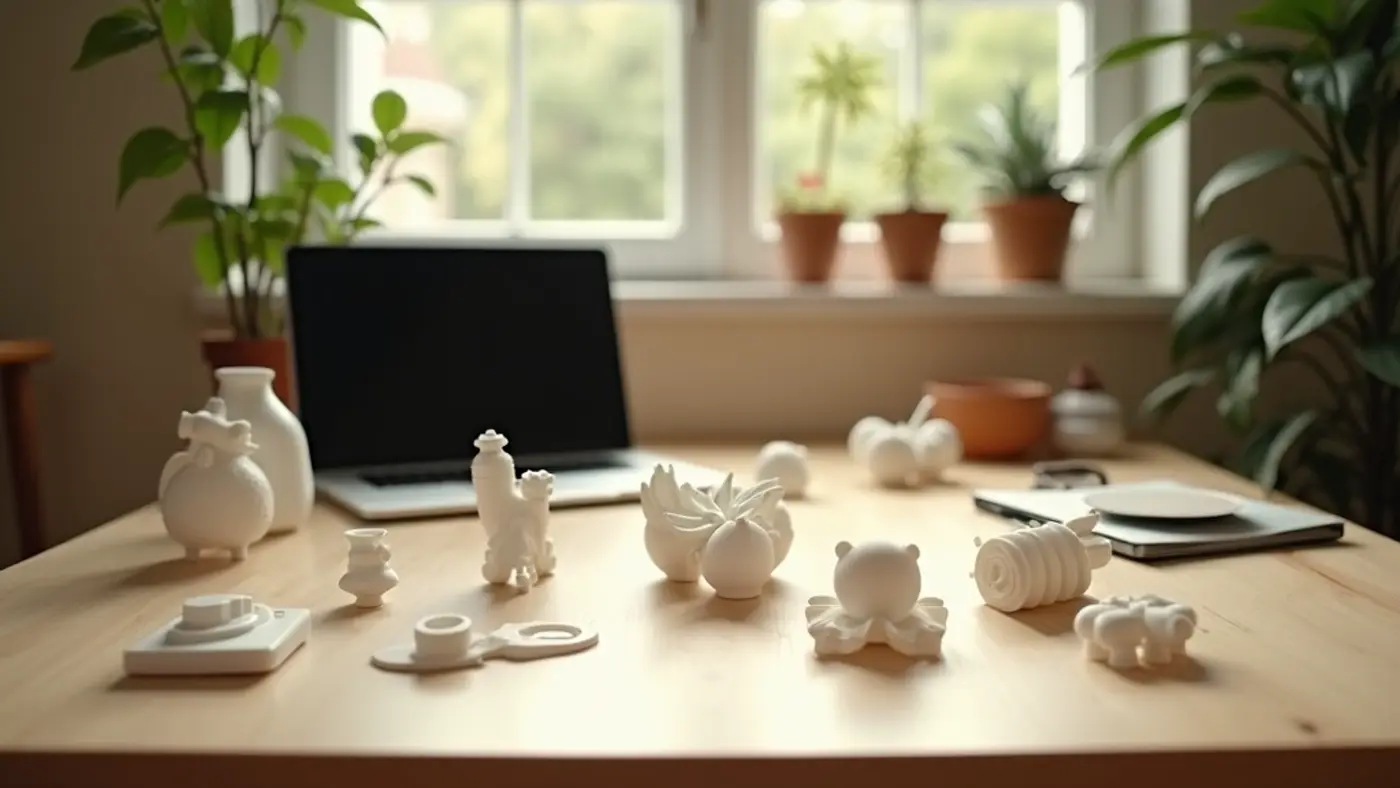
Free STL files
Tested, functional FDM models — marine hardware, cable management, bracket clamps, winch accessories. Download from Printables with no account, no email gate, no catch.
Open source · Free resources
Free STLs, a browser-playable education platform, guides, and code — the generosity layer of 3D3D. No paywalls, no email captures, nothing gated.
3D3D publishes functional FDM models, an open education platform, and code anyone can read, fork, and use. The free work is real work — the same design discipline and real-hardware testing that goes into paid parts. Technical people trust a shop that gives things away well.
Four categories, no strings. Each one is genuinely useful on its own — not a lead magnet, not a watered-down demo.
Tested, functional FDM models — marine hardware, cable management, bracket clamps, winch accessories. Download from Printables with no account, no email gate, no catch.
Operating-system and assembly concepts made playable in any browser. Free for classrooms, public libraries, and anyone curious about how computers actually work at the instruction level.
Libraries, utilities, and tooling published under open licences at github.com/3d3dcanada. Pull requests and issues welcome. Nothing behind a login, nothing feature-locked.
FDM setup walkthroughs, material selection guides, and print-to-production tutorials on YouTube. No paywalls, no memberships, no upsell in the middle of a how-to.
Every free model is on Printables. Download and print on any FDM printer — tested on a Prusa Core One L before publishing.
Printables · @KTK3D_3050116
Every model comes from a real need: something that broke, something that didn't exist, something that costs too much to buy. Winch cup holders. Hatch-seal brackets. Cable organisers designed for marine runs. Line stoppers that fit common cleats. All tested on a real boat or in a real installation before publishing.
Browse free models →FDM first principles
Every published STL is print-ready: tolerances sized for FDM shrinkage, orientation notes in the description, and recommended material listed. No last-minute surprises in the slicer. If a print needs support material, the listing says so — and where to put it.
A browser-playable operating-system and assembly simulator — free for classrooms, libraries, and anyone who wants to understand how computers work from the inside.
OpenKernel EDU makes the low-level parts of computer science tangible. You can step through assembly instructions, watch memory change, and see how an operating system schedules work — all in a browser, with nothing to install. It runs on a Chromebook, a library computer, or a ten-year-old laptop. There is no student cap, no data collection, and no licence to manage.
It is built for the classroom that does not have a budget for software, and for the self-taught programmer who wants to understand what happens between the code and the CPU. Curious adults are welcome too.
Technical facts
| Access | Any modern browser, no install |
|---|---|
| Cost | Free — no licence, no subscription |
| Data collected | None from students or teachers |
| Devices | Desktop, laptop, Chromebook, tablet |
| Concepts covered | Assembly, memory, OS scheduling |
| Target audience | Classrooms, libraries, self-learners |
Public repositories live at github.com/3d3dcanada. Licences stated per repo. Pull requests and issues welcome.
The GitHub account at github.com/3d3dcanada is where code goes when it is ready to be useful to others. That means it is documented, it has a licence, and there is a path for contributors. Projects in early development stay internal until they reach that bar.
If you find something that should be open and is not, or if you want to contribute to an existing repo, email [email protected] — we move faster on concrete requests than on broad interest signals.
3D3D on GitHub →How to contribute
A shop that publishes good free work earns technical trust that marketing cannot buy. When you download a model, run OpenKernel in your classroom, or read the source code before you decide to hire us — you have already seen the quality standard. There is nothing to oversell.
The free work also solves real problems for people who cannot afford the paid work. That is worth doing on its own. A student using OpenKernel in a library is not a lost sale — they are someone who might build something great, and we would rather be part of that than not.
Practically: free models train our slicer settings, expose edge cases in our file export pipeline, and generate honest reviews. They make the paid work better. The generosity is not separate from the business — it is part of how the business runs well.
If you can't find what you need in the free files, send dimensions and a description. We quote within 24 hours, ship from New Brunswick, and print on real hardware. $18 minimum order.