
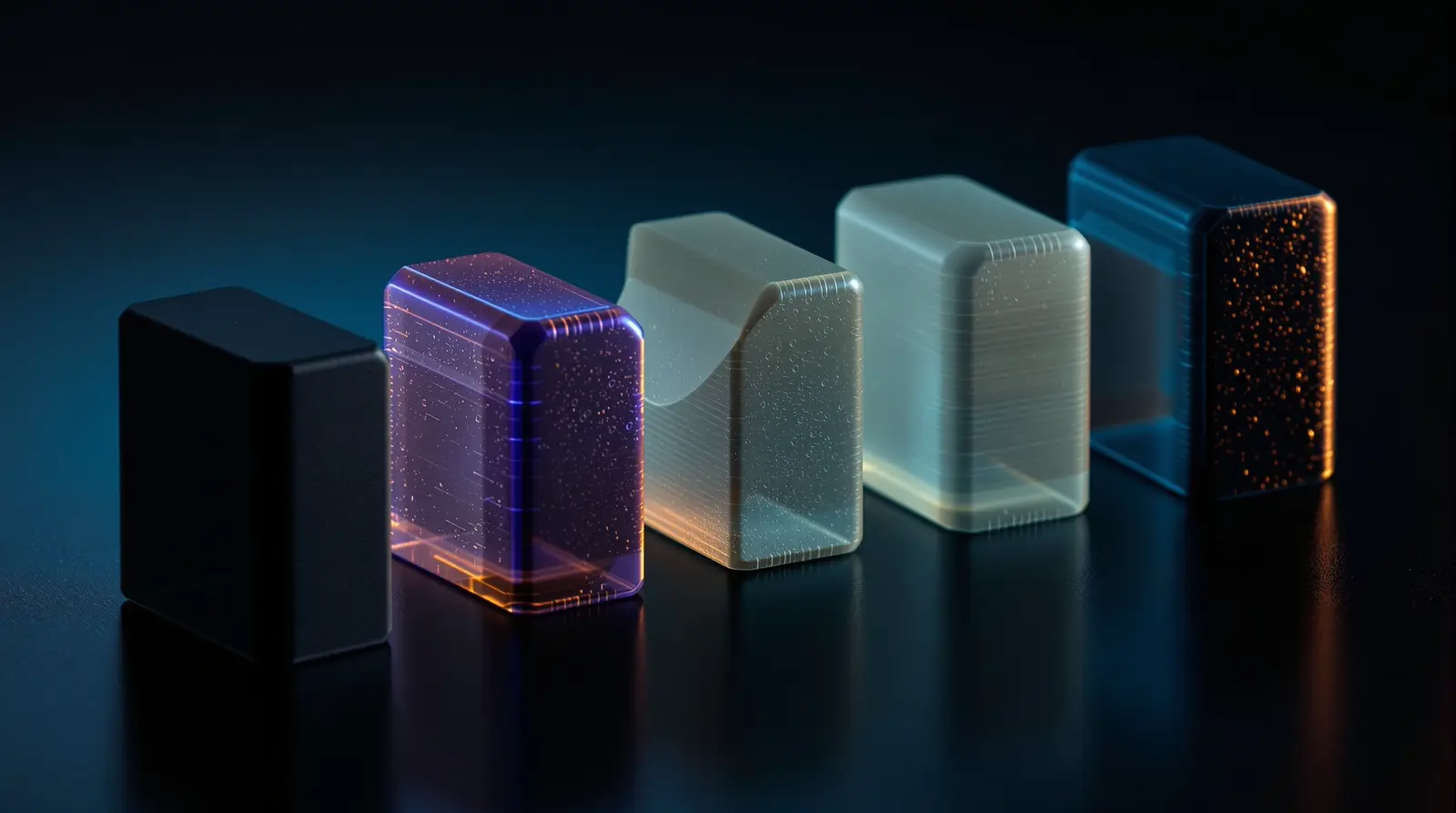
The everyday four
- PLA — easy, accurate, cheap; softens near 60 °C, so keep it out of hot cars and direct heat.
- PETG — tougher and heat-resistant to ~80 °C; the default for functional and outdoor parts.
- ABS/ASA — ~100 °C and (for ASA) UV-stable; the marine and automotive choice.
- TPU — flexible rubber-like material for seals, grips, and dampers.
When to reach for composites
Carbon- and glass-fibre grades (PLA-CF, PETG-CF, ASA-CF, PA-CF) add serious stiffness without much weight. For a load-bearing bracket that lives outdoors, ASA-CF is hard to beat — stiff, light, and UV-stable at once.
The honest rule
There is no 'best' material, only the right one for the environment: sun, salt, heat, load, or flex. Our filaments page lists all 23 by type with per-gram pricing and a selection chart to match the material to the job.
See also
- The filaments page — 23 materials by type with pricing and a selection chart.
- Designing for Strength — how orientation and infill change what any material can do.